
Current Affair
Current Affairs
Global Warming And Climate Change
Early Warning Systems in the Himalayas
Oct 29, 2025 Admin
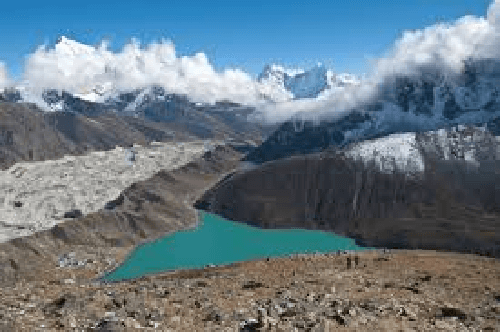
The Himalayan region often referred to as the Third Pole, needs robust Early Warning Systems (EWS) to tackle rising climate-induced disasters amid inadequate disaster preparedness.
Rising Vulnerability of the Himalayas
Need for Early Warning Systems (EWS)
Challenges in Setting up EWS in the Himalayas
Role of Technology and Artificial Intelligence in EWS
Indian Initiatives
Our Areas of Expertise
CBSE
ICSE
NTSE
DAV
Australia Education
IMO-Mathematics Olympiad
Central Government Service
ISO - Science Olympiads
State Government Services
Banking And Insurance
Railways & Metro Services
MBA Entrance
Law Entrance
English Proficiency
Reasoning Proficiency
Computer Proficiency
Navodaya Entrance 6th & 9th
Sainik School Entrance
Andhra Bank
Students / Parents Reviews [10]
One of the best institutes to develope a child interest in studies.Provides SST and English knowledge also unlike other institutes. Teachers are co operative and friendly online tests andPPT develope practical knowledge also.

Aman Kumar Shrivastava
10thAbhyas Methodology is very good. It is based on according to student and each child manages accordingly to its properly. Methodology has improved the abilities of students to shine them in future.

Manish Kumar
10thMy experience was very good with Abhyas academy. I am studying here from 6th class and I am satisfied by its results in my life. I improved a lot here ahead of school syllabus.

Ayan Ghosh
8thMy experience with Abhyas academy is very good. I did not think that my every subject coming here will be so strong. The main thing is that the online tests had made me learn here more things.

Hiya Gupta
8thIt was a good experience with Abhyas Academy. I even faced problems in starting but slowly and steadily overcomed. Especially reasoning classes helped me a lot.

Cheshta
10thIt was good as the experience because as we had come here we had been improved in a such envirnment created here.Extra is taught which is beneficial for future.

Eshan Arora
8thIt has a great methodology. Students here can get analysis to their test quickly.We can learn easily through PPTs and the testing methods are good. We know that where we have to practice

Barkha Arora
10thI have spent a wonderful time in Abhyas academy. It has made my reasoning more apt, English more stronger and Maths an interesting subject for me. It has given me a habbit of self studying

Yatharthi Sharma
10thBeing a parent, I saw my daughter improvement in her studies by seeing a good result in all day to day compititive exam TMO, NSO, IEO etc and as well as studies. I have got a fruitful result from my daughter.
Prisha Gupta
8thAbhyas is a complete education Institute. Here extreme care is taken by teacher with the help of regular exam. Extra classes also conducted by the institute, if the student is weak.