ERR - 9th - Biology [Diversity in Living Organisms III]


Logoe-NOTES
(990 [C] )
9th (Biology)
Diversity in Living Organisms III

Phylum Mollusca

Phylum Mollusca: Molluscs are soft-bodied, unsegmented, bilaterally symmetrical animals. This is the second largest group of animals after arthropods.

  • It has a very ancient fossil record.
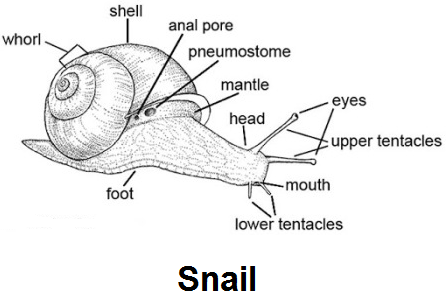
  • The body has three parts: a head, a dorsal hump containing the internal organs and a ventral muscular foot. The dorsal hump is covered by a soft covering called the mantle, which secretes a calcareous shell. The animal retreats into this shell for protection.
  • Many molluscs have gills called ctenidia, for the exchange of gases. 
  • Terrestrial molluscs do not have gills. The space between the mantle and body wall, called mantle cavity, acts as the lungs.
  • Some marine molluscs lack eyes and tentacles, while most terrestrial molluscs have these.
  • Most molluscs have a rasping, tongue-like organ called radula for feeding.
  • They also have digestive gland called hepatopancreas.
  • The circulatory system is open.
  • Renal organs (like kidneys) lie close to the heart and help in excretion. 
  • Reproduction in molluscs is sexual. Usually the sexes are separate, though some animals are hermaphrodites.
  • Snails (Helix, Limnaea, Pila), mussels (e.g., Unio), conches (Strombus), limpets (Patella), oysters, clams, octopuses are all molluscs. The shells of oysters, clams, scallops, etc., have two halves hinged in the middle.
  • Members of the genus Chiton have 8 pieces of shell. Cuttle fish (Sepia), octopuses and squids (Loligo) have ink sacs. They squirt this ink to confuse the prey and predators. Giant squids are the largest invertebrates.
  •                                                  

    Phylum Echinodermata

    Phylum Echinodermata: Echinoderms are spiny-skinned marine animals. They have an exoskeleton of calcareous plates from which the spines arise.

  • The adults are radially symmetrical, while the larvae are bilaterally symmetrical.
  • Most echinoderms are sessile. Some live in groups, while others are solitary.
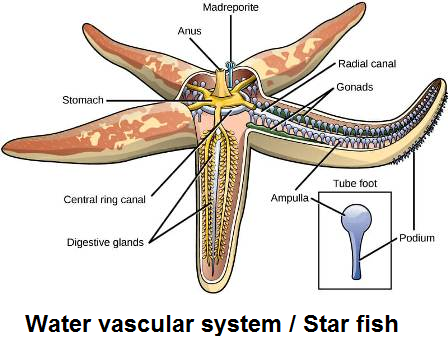
  • A unique feature of echinoderms is the water vascular system. It is a complex system of water-containing tubes and bladders which pass through pores in the skeleton.
  • On the outside, these tubes look like feet. These tube feet are used for locomotion, exchange of gases and feeding. In most echinoderms the mouth is on the lower surface and the anus is on the upper surface.
  • Echinoderms reproduce sexually and the sexes are separate.
  • Some echinoderms like starfish (Asterias) and brittle stars (e.g., Ophiura) have arms arising from a central disc. Some, like sea urchins (Echinus), heart urchins (Echinocardium) and sea cucumbers (Holothuria) do not have arms. Sea cucumbers have tentacles near the mouth. Feather stars (Antedon) look like cups and have a branched anus.
  •                                                           

    Phylum Hemichordata

    All the organisms we have studied so far are invertebrates. They lack a notochord. The notochord is a flexible, rodlike structure running through the length of the body, above the alimentary canal. In all chordates (the phylum we will, study after this), the notochord lies below the hollow nerve cord.

  • Hemichordates are wormlike unsegmented creatures positioned between Echinodermata and chordates. These form a link between invertebrates and Chordates.

  • They have some characteristics of both the groups.

  • The gill slits through which they respire are very similar to those of chordates.

  • A notochord is absent. But the nerve cord, which is restricted to the collar region, is similar to that of chordates.

  • The body of hemichordates is divided into three regions—proboscis, collar and trunk.

  • It is bilaterally symmetrical. Hemichordates are marine creatures.

  • They reproduce sexually and the sexes are mostly separate. Examples: Acorn worm (Balanoglossus) and Cephalodiscus.

  • Note: In older classification, Hemichordata was a subphylum placed under phylum Chordata.

    Phylum Chordata

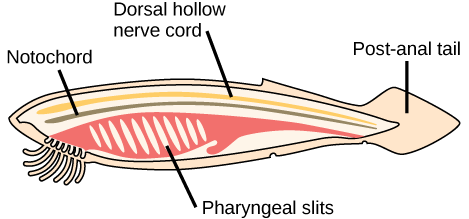
    All animals which have a notochord at some stage of life are called chordates. The notochord is a flexible, rodlike structure running through the length of the body of chordates, or animals of the phylum Chordata. It lies below the nerve chord and provides support to the body. In higher chordates, or vertebrates, the notochord is replaced by the vertebral column. In addition, all chordates show the following characteristics at some stage of life.


                                                    Chordata

  • A tubular, hollow, dorsal nerve cord which lies above the supporting notochord.
  • A set of gill slits in the throat called pharyngeal clefts.
  • A post-anal (behind the anus) tail.
  • A proper blood-circulation system.
  • This phylum is divided into three subphyla—Urochordata, Cephalochordata and Vertebrata. Urochordates and cephalochordates are called lower chordates, or protochordates. Vertebrates are the most developed animals.


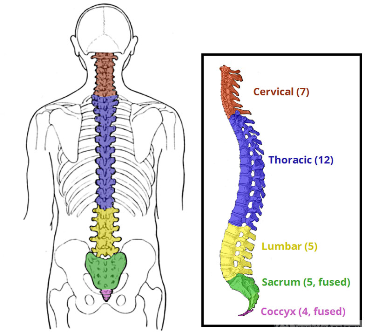
                                                      Vertebral Column in Humans

    Subphylum Urochordata Protochordata

    Most urochordates are sessile marine animals. The body is unsegmented and covered by a cellulose-like substance called tunicin.

  • Though gill slits are present, the adults lack other chordate characteristics.

  • The notochord occurs only in the tail of the larva.

  • The adult lacks it. It also lacks a tail and a nerve cord, though the larva has these features.

  • This kind of change in the form in which the adult is more primitive than the larva is called retrogressive metamorphosis. Examples: Herdmania, Doliolum and Pyrosoma.

  • Subphylum Cephalochordata Protochordata

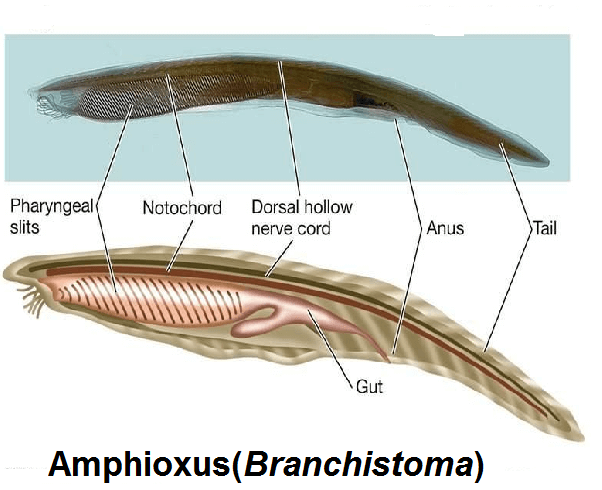
    Subphylum Cephalochordata (Protochordata): Amphioxus (Branchiostoma) is the only living representative of this subphylum. They are transparent, fishlike creatures without a brain and eyes.

  • They spend most of their life buried in the sediments under the oceans.
  • They possess all the characteristics of chordates.
  • The notochord extends through the body up to the head.
  • The nerve cord lies above it.
  • They have gills and a tail, and their circulatory system lacks a heart. Excretion occurs through protonephridia.
  •                                                       

    Subphylum Vertebrata

    Subphylum Vertebrata: All vertebrates have a vertebral column. They have a complex nervous system including a brain enclosed in a cranium (brain box). This is why they are also called craniates. They are divided into seven classes.

  • Mammals
  • Birds
  • Reptiles
  • Amphibians 
  • Bony fishes
  • Cartilaginous fishes 
  • Jawless fishes
  • Characteristics of Vertebrates:  A vertebrate is an animal that has all of the following characteristic features:

  • A stiff rod running through the length of the animal(it could be either be the vertebral column or notochord)
  • Humans and all other vertebrates posses a notochord as an embryo and it eventually develops into the vertebral column.
  • A bundle of nerves run above the vertebaral coumn(spinal cord) and the alimentary  caanal exists below it.
  • The mouth is present at the anterior portion of the animals or right below it.
  • The alimentary canal ends in the anus, which opens to the exterior. The tail extends after the anus. 
  • Class Cyclostomata

    These eel-like jawless organisms are the most primitive vertebrates. Their characteristics are :

  • They are animals with a cartilaginous endoskeleton and a rodlike notochord.
  • Their gills are enclosed in pouches elongaed into 6-15 pairs of gill slits ofr respiration.
  • The skin is smooth, soft, slimy and scaleless.
  • The circulatory system includes a two-chambered heart.
  • They are ectoparasites which stick to fish. A round suctorial mouth with a rasping tongue helps them do this.
  • They are unisexual and fertilization takes place outside the body, or is external.
  • Example: Lampreys and hagfish are included in this class.


    Class Chondrichthyes

    Class Chondrichthyes: These are cartilaginous fish, i.e., their skeleton is made of cartilage. Their characteristics are :

  • They are mostly marine.
  • The body is either shaped like a spindle or like a flattened disc. Their scales, called placoid scales, are different from those of bony fish.
  • They breathe through gills which are not covered by an operculum. An operculum is like a bony flap.
  • The heart has two chambers. Cartilaginous fish are unisexual and fertilization is internal.
  • Example: Sharks, sting rays, electric rays, dogfish, Cow fish, Flying fish etc.


    Class Osteichthyes

    This class includes bony fish, or fish with a skeleton of bone. Their characteristics are :

  • These fish have ctenoid or cycloid scales which are different from those of cartilaginous fish.
  • Unlike cartilaginous fish, they have gills covered by an operculum.
  • Their fins are membranous, while those of cartilaginous fish are fleshy.
  • Many bony fish have an air-filled swim bladder to help them float. They have a two-chambered heart.
  • Some are marine, while some live in freshwater and in most fertilization is external.
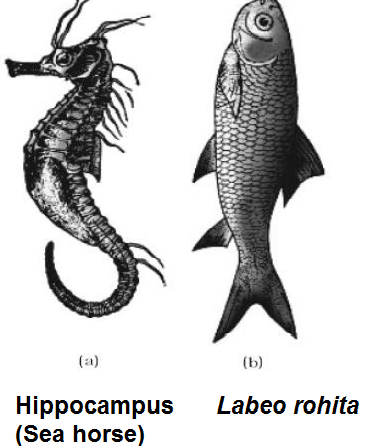
  • Most of the fish we eat, like herring, trout, carp, perch and salmon, are bony fish. Sea horse (Hippocampus) and lung fish (Protopterus) are also bony fish.
  • Class Amphibia

    Class Amphibia (Greek: amphi:dual , bios-life)

    Amphibian means animals which can live in water and on land.

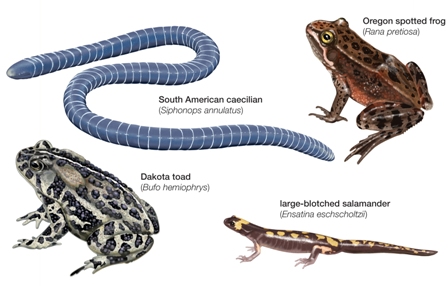
    These were the first land vertebrates (animals with backbones) to appear. Their limbs are adapted for walking and leaping. Most of them have two pairs of pentadactyle (with five digits) limbs. Some have fewer digits. Their skin is moist and without scales. They have a three-chambered heart with two auricles and a ventricle. Amphibians breed in water. Fertilization is external. The larvae (tadpoles) are aquatic They breathe through gills and have tails. Tadpoles undergo metamorphosis and change into adults which respire through lungs . The moist skin also helps in respiration.

    Examples: Frog (Rana), toad (Bufo), tree frog (Hyla), salamanders (e.g., Triturus), and caecilians (e.g., Ichthyophis). Caecilians are limbless amphibians.


    Class Reptilia

    Reptiles are terrestrial vertebrates with a dry, scaly, impermeable skin covered by scales. Their characteristics are :

  • They have limbs which are absent in snakes and some lizards.

  • They respire through lungs.

  • The heart has two auricles and a ventricle which is partly divided.

  • They are cold-blooded (poikilotherms) , i.e., their body temperature varies according to that of the surroundings. (Fish and amphibians too are cold-blooded.)

  • Fertilization is internal. The fertilized eggs are laid with a shell and the young reptile hatches out of the egg.

  • Example: Turtles, house lizards (Hemidactylus), snakes and crocodiles are reptiles. In crocodiles, the heart is four-chambered. Others have two auricles and incompletely divided ventricles.

    Draco is a genus of agamid lizards that are also known as flying lizards, flying dragons or gliding lizards. 

    Class Aves

    Class Aves (Latin. Avis : bird)

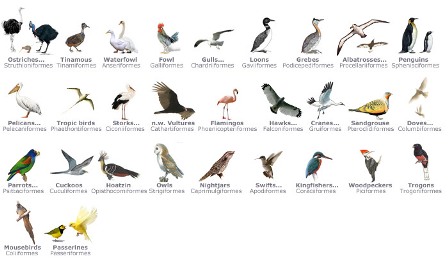
    Aves include all birds. Birds are often described as ‘feathered reptiles with the power of flight’.

    Characteristics of Aves are :

  • The body is streamlined to reduce air resistance during flight.
  • The skin is covered by feathers, the forelimbs are modified into wings, but the hindlimbs have scales. 
  • The skeleton is strong but light, and the limb bones are hollow, with air sacs to make flying easier. 
  • Birds do not have teeth or strong jaws, but they have hard beaks. These beaks are modified according to their feeding habits.
  • Birds are warm-blooded , i.e., their temperature does not depend on that of the surroundings.
  • They have a four-chambered heart with two auricles and two ventricles.
  • They breathe through lungs. They do not have pleural cavity like us. They also have bronchi that ends up into the air sacs. 
  • Fertilization is internal and the fertilized eggs are laid with yolk and a hard shell.
  • There are also some flightless birds that cannot fly. Some of the examples are Ostrich and Emu.
  • Some common birds are crow (Corvus), pigeon (Columba) and sparrow (Passer). There are some birds that are good runners, but they cannot fly, for example, ostrich.


    Class Mammalia

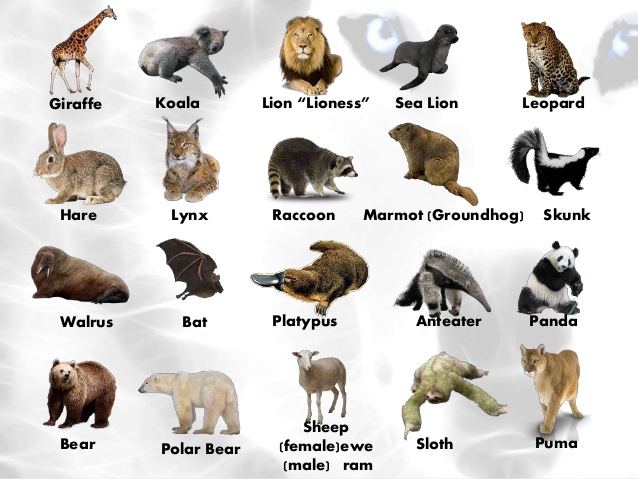
    Class Mammalia: Most mammals are terrestrial. Whales, dolphins, seals and walruses are some aquatic mammals. Mammals have two pairs of limbs and their body is covered with hair.  Their characteristics are :

  • The skin has sudorific (sweat) and sebaceous (oil) glands.
  • There are four types of teeth buried in sockets. Many of these appear twice in life.
  • They breathe through lungs and have a four-chambered heart.
  • They are warm-blooded and their body cavity is divided into a thorax and an abdomen by a muscular diaphragm.
  • Mammalian red blood cells are non-nucleated.
  • Fertilization in mammals is internal. The embryo develops in the uterus. And when the young ones, are born, they feed on milk from the mother’s mammary glands.
  • Example: Some like the platypus and echidna lay eggs, while some like the kangaroo give birth to poorly developed young ones. Mammals are broadly grouped into six groups based on their feeding habits and locomotion.

    The representative animals of these groups are: (a) platypus, (b) kangaroo, (c) man, (d) whale, (e) rat, and (f) elephant.


    Want Help?
    Powered by ABHYAS ChatBOT.

    What describes you best?
    I am a School Owner
    I want to appear for Govt. Exams
    Minimize